This blog started several years ago when I became interested in the connection between coffee farmers and the final cup. Since then my wife and I started a coffee roastery business and have enjoyed every single step along the way. This is a place where I share my personal opinions and reflect on my experiences with the coffee industry, coffee origins, coffee profiles and everything coffee.
Sunday, February 23, 2014
Espresso experience in Brazil
It was interesing to note the price of espresso and espresso based drinks. One thing is certain, espresso is not cheap. The price of a 60 ml (about 2oz) shot of espresso was on average in the city of Sao Paulo, Rs.4 (taxes included). Or approximately $1.8 US dollars. About the same as in the US, but where salaries are almost a third. Quality varied, but overall, the shots presented a full body and had great acidity. People are used to drinking their coffee and espresso with lots of sugar or sweeteners in Brazil. So the sweetness that an espresso should have was not there. But the light sourness that comes along with a heavy and full body coffee bean was evident. One issue I noticed in a couple of places, was that the crema that develops on top of the espresso, vanished after a few seconds of leaving the coffee sit. Which does not necessarily mean anything bad. But I did notice that. So yes, Brazilians are used to good strong coffee.
I have to say that the espressos and espresso drinks were far better than the regular drip coffee served at the hotel for breakfast, which for a 5 star hotel, was dismal in quality. In Brazil you will find a dominant use of espresso machines and espresso based drinks all over the place. Even fast food and convenient stores had full blown manual espresso machines with the grinder for the portafilters right next to it. This compares drastically to the US and North America in general, where cheap brewed coffee is more dominant in these types of locations. In short, I enjoyed my espresso drinks at the different locations I tried them. Maybe they were not as sweet and complex as espresso drinks can be, but they did the job for me. And the atmosphere, well, thats something unique in Brazil. No matter where you end up walking for a fix, there will always be a good barista/server serving your espresso with a smile.
Thursday, January 30, 2014
When it comes to making cold brew coffee, I really don't see the need to reinvent the wheel. I have watched many people prepare it and even though we were never big fans of cold brew, this past summer we started using it at the coffee shop. Cold brew coffee is ideal for cold espresso drinks, where you need strong flavors and boldness to blend well with the additional water, ice, flavoring or milk. Think of cold brew as a coffee "concentrate" to mix with additional liquids. Alex T., our head barista uses it at home with hot water to make himself an americano when he needs a fix. So you can use as a base for a hot coffee cup as well. We now keep a jar of cold brew in the fridge all the time. We prefer to use our Colombia Los Naranjos and Honduras coffee for cold brew.

You can watch Leesha on Youtube who does a fantastic job of explaining how to prepare cold brew. I have come to use her measurements (coffee vs water mix) with great results. Enjoy!!
Thursday, June 6, 2013
A Roya Toolkit
Without waiting for governments, donors, exporters, or other coffee traders to agree on what to do about the situation with roya, they have worked fast and clever to produce a toolkit, to deal with the issue. Its a DVD/ Video that can be used by agronomists, and technical field staff in Spanish speaking countries, who want to deal with the disease.
Check it out, they have even developed a whole website just to deal with the issue.
Keep it up SH!!
Youth, Coffee Farmers and Agriculture
An interesting angle to the issue surfaced today in my discussions with a friend who works in agriculture development in Honduras. Horticulture farmers tend to be younger, while coffee farmers much older. At least in Honduras.
An interesting discussion will be online on June 11, sponsored by USAID's Agrilink Program.
Join the discussion!
Wednesday, May 29, 2013
McDonald's invests $6.5M in sustainable coffee program
In short, McDonalds will invest close to $7 Million in Guatemala, to run a project that will seek to source coffee in a sustainable manner. It has already engaged with two very reputable organizations, that work on expert solutions to agricultural problems. SCAN and Technoserve.
I also like the fact that they have made an effort to partner with these organizations, and not try to go at it alone. And finally I like their approach to financing the operation. As opposed to getting funds from their Treasury or CRS platform, they have charged each of their North American franchises, $1000 to participate. At such a low cost per store, this has been an immediate "buy in" from store managers.
I like it!
I wonder where they source their chocolate from? Thats a different story.
Walmart and Small Farmers (in Nicaragua)
In 2010, Walmart announced a “global commitment to sustainable agriculture” that set forth the goal that by 2015 the company would sell $1 billion in food sourced from 1 million small and medium farmers worldwide. In 2012, Walmart was the world's third largest public corporation, with 8,500 retail stores in fifteen countries. Their operations in the developing world increasingly are designed to source directly from small and medium farmers.
However, the jury is still out when it comes to the benefits to small farmers in linking to corporations like Walmart. An interesting analysis is done in Nicaragua by a recent publication in the American Journal of Agricultural Economics. The study concludes that there is not enough evidence, over a period of 8 years, to confirm that farmers did indeed benefit in terms of welfare. Very generalistic comment. But worth digging into.
Read the article.
Tuesday, May 28, 2013
The Blog
The title of the blog, as some of you may wonder, actually comes from a TEDx presentation I did around the subject. And my good friend Michelle Perez, whom used to work with us at the MIF, helped me put together.
Happy eating, drinking and reading...
I love this picture. Can you guess what it is? And where it was taken? (country that is)
Guide to Sustainable Food Sourcing - Worth the Read...
In light of this, I highly recommend the reading below. Its a practical guide for companies, but it is quite general for all audiences. It was published last month by Business for a Better World.
From the summary: "Global demand for food, feed, and fiber is expected to rise by 70 percent as the population grows, incomes rise, and a larger proportion of people settle in urban areas. This demand will put greater pressure on securing supply, while the constraints on land, energy, water, and other inputs required by agriculture will also increase.
Faced with these challenges, many companies are seeking to incorporate sustainability into their sourcing programs. For large, consumer-facing companies in particular, connecting down to the farm level can be challenging, since global supply chains are complex and often include thousands—if not millions—of farmers. As these companies seek to better understand the risks and opportunities associated with production of their agricultural inputs, they’re asking questions: Where do I start? How do I prioritize where to deploy resources? What are my risks and opportunities for innovation? How do I integrate sustainability considerations into procurement decision-making?
To help companies navigate the path to a sustainable sourcing strategy that supports future growth, BSR contributed to the publication of “Sustainable Sourcing of Agricultural Raw Materials: A Practitioner’s Guide,” which was developed through a unique collaboration among seven high-profile organizations.* The guide provides a set of practical questions and suggestions for implementing sustainable sourcing, highlighting examples of steps being taken by a range of companies including the Coca-Cola Company, McDonald’s, PepsiCo, Starbucks, Unilever, and Walmart."
GMOs - Does your food have them?
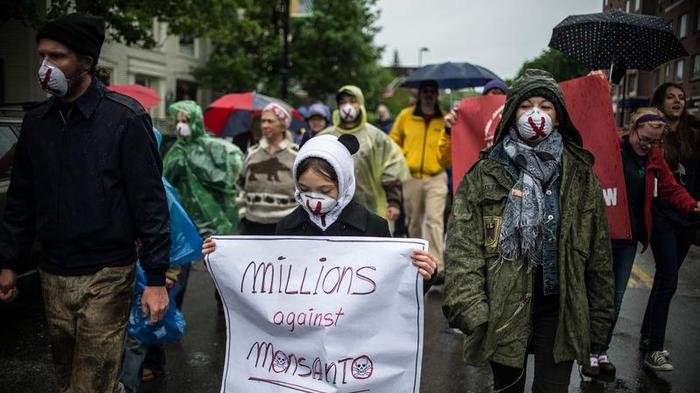
Not completely sure what GMOs are. But I sure would like to know if they are in my foods, and the food that my children eat. A little heard of protest went on in LA this past week, precisely to raise this issue. Dont we have a right to know if our food contains Genetically Modified Organisms. Why are food giants and agricultural corporations so opposed to informing the public what is it that we eat?
Question was raised by a Vermont Senator and a vote took place in the Senate last week. At least now the State if Vermont will requite labels to be clear on the issue, just like most other developed countries in the world. Why does the US not take a stand? Big money again and again.
Tuesday, July 24, 2012
Barista of the Year!!!
So this year it was Guatemala's turn!!! Raul Rodas, known as "El Tigre" is the new 2012 World Barista Champion!! Congratulations to this young lad who proved himself in Vienna, Austria, in a very tough competition. Raul is the second competitor from a producing country to win the World Barista Championship, making his victory the second consecutive such win, following Alejandro Mendez’ title in 2011.
Mr. Rodas competed with pulp natural processed coffee from where else – Guatemala – hailing from Finca Soledad, in the Acatenango region, a farm I had the opportunity to visit earlier this year. Coffee was experimentally dry fermented for 14 hours, then dried for 15 days on raised African-style processing beds.
Read the full article here.
Thursday, July 19, 2012
Single Origin Cocoa?
Small coffee farmers in Brazil
Thursday, June 21, 2012
Small Coffee Farmers from Colombia
COFFEE DRYING METHODS FOR SMALL FARMERS
A big part of preserving quality in coffee is proper drying, and just like roasting there is no single perfect drying curve. There are many variables involved in drying which makes it complicated to standardize; humidity, temperature, coffee density, among others all play a role in the drying process. In order for coffees to be accepted into Asociacion Los Naranjos its moisture content has to be between 10 and 11.5%. Traditionally, coffee producers have determined if the coffee is ready to be taken off the patio visually and/or by touch. Many claim to accurately determine the moisture content through this method but there is a great deal of room for error.
Over the years, the members of Asociacion Los Naranjos did not know the moisture content until they delivered the coffee to the purchasing point in the town of San Agustin. Recently, Cafe Imports supplied Los Naranjos with a moisture meter. This has been of great benefit to the Association and will help them to continue providing top quality Specialty Coffee.
Wednesday, February 8, 2012
Another article on the Single Cup Machines
This article is an interesting read on the real price of the single cup coffee. Are there articles out there about the environmental cost of these pods?
The Price of Convenience
Multimedia
Wednesday, January 25, 2012
Will the K-Cup kill specialty coffee?
Probably not. I like this article by Pan Demetrakakes, editor of Specialty Coffee magazine. The link to the article is not working, so I am attaching the article here. Enjoy.
By Pan Demetrakakes
The Pod People are coming.
Green Mountain Coffee Roasters has become the biggest roaster in America largely on the strength of its Keurig pod brewing system. Keurig, which Green Mountain acquired in 2006, is the developer of single-serve K-Cup pods.
The K-Cup fits my personal criterion for a truly dynamic innovation: It looks painfully obvious, but only in retrospect. It’s a simple plastic cup filled with ground coffee and topped with induction-seal foil. A Keurig brewer pierces the pod and brews a perfect cup of coffee—or at least, one that’s a lot better than the alternative, which is often the dregs of a pot that’s been sitting on a burner for heaven knows how long. It makes the K-Cup an attractive alternative for offices (including my own), as well as gas stations, waiting rooms and any other location where coffee of indifferent quality is often consumed.
That includes home kitchens. Green Mountain is counting on home sales of the K-Cup brewer to push sales even higher. And they’ve already had dizzying success. Green Mountain now is the leading roaster/packager of single-serve coffee. Its sales have multiplied by five in the last three years, and its stock reached an all-time high in September (although it’s dropped sharply since then).
Green Mountain succeeded in large part because of a smart basic decision: making K-Cup technology freely available. Coffee roasters who want to use the Keurig system need only license it from Green Mountain. Major retailers who have taken advantage include Starbucks and Dunkin’ Donuts, both of whom are planning to use K-Cup pods to expand the already substantial grocery sales for their branded coffee.
Contrast with Nestlé, which has a similar pierce-the-pod system in Nespresso. Since introducing Nespresso in 1986, Nestlé has tried to control it down to the last coffee bean. It markets both the machines and the pods that go into them, and allows no one else to do so.
This business model worked great for Apple Computers. But ground coffee, however complex and subtle it may be, is not software. And while Nespresso has consistently been lucrative for Nestlé, the company is now embroiled in lawsuits in France, Switzerland and Holland over pirated Nespresso capsules, while the Keurig system soars past.
What does this all mean for the specialty coffee retailer?
Movie buffs will recognize this column’s headline as a play on “Invasion of the Body Snatchers,” a sci-fi classic from 1956 (there have been a couple of remakes) about an alien invasion of human lookalikes. They start out as pods that bloom into identical replicas of whichever human is unfortunate enough to be nearby.
Is that destined to be the fate of specialty coffee? Will the K-Cup pod become the incubus for mechanically brewed coffee that smells and tastes so much like the good stuff that it will confuse consumers?
I don’t think so. In fact, the K-Cup could be a net positive for the specialty coffee industry by raising consumers’ expectations. The more people are exposed to good coffee, the more likely they are to seek it out, in whatever form.
Your competitor can sometimes be your ally. That’s true for Starbucks, which raised the general consciousness about good coffee enormously, and it may very well hold true for the K-Cup.
Saturday, January 21, 2012
Cupping the Nicaraguan coffee from Esteli
Thursday, December 15, 2011
Is Fair Trade really fair?
Thursday, November 17, 2011
What is Sustainable Coffee?
Take this couple from Northern Peru, where some of the best coffee comes from, and a region slowly becoming a major player in the specialty coffee market. San Ignacio, Cajamarca. This simple picture reveals a number of positive aspects about their farm that may not be too apparent at simple eye view. Lets see.